
The 19th-Century Family Fortunes Funding Degrowth
How P4NE Hides Its Donor Funding
In their launch editorial, the authors of the New Economies for Ending Poverty (NEEP) roadmap called for “changing the rules of the global economy.” They were promoting a policy playbook for the ‘degrowth’ movement, which has the stated goal of reducing economic production to redistribute wealth and reduce resource consumption.
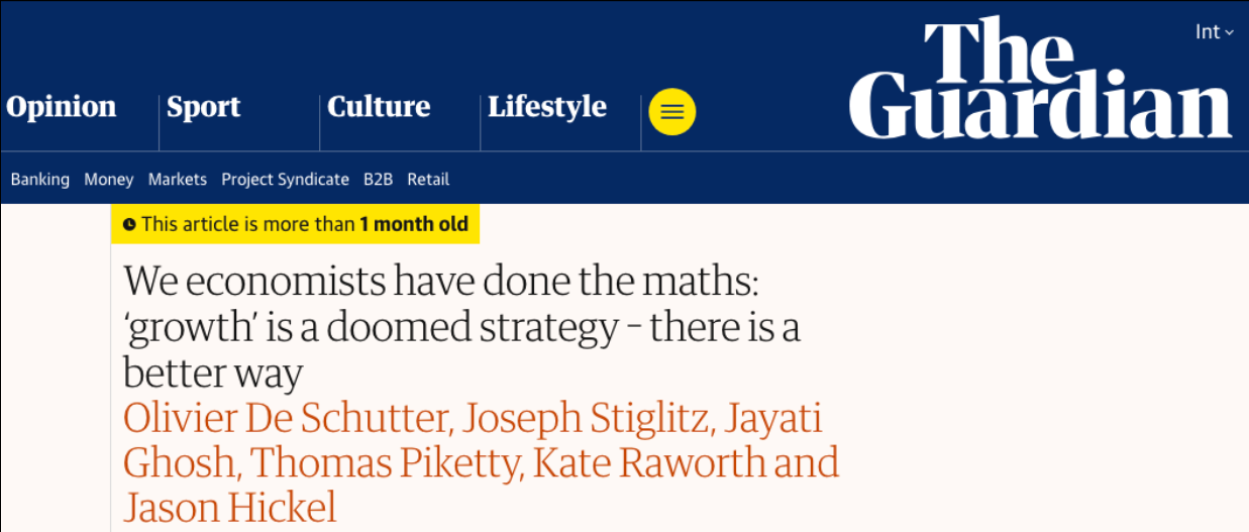
An Effort News investigation identified the source of NEEP’s income: 19th and early 20th century family fortunes. Those calling for degrowth are not the poor and hungry. Instead, they are heirs to generational fortunes, whose wealth insulates them from the shortages degrowth would cause.
NEEP proposed 80 policy measures, including maximum income, price controls, job guarantees, and binding limits on resource use. Their plan drew widespread outcry from economists, who argued NEEP authors were misrepresenting the views of economists and misrepresenting reality.1
NEEP’s own finances are convoluted — their donation sizes are literally hidden using Swiss bank accounts. NEEP is primarily funded through P4NE, or Partners for a New Economy, whose funds were held by the Swiss Philanthropy Foundation (SPF). Effort identified these donors using public records and filings:
19th Century Heirs
20th Century Heirs
The Americans
Here’s how P4NE hid the full list, along with donation amounts, from the public. P4NE’s funds are held by the Swiss Philanthropy Foundation (SPF), meaning that SPF is the recipient of all P4NE donations. SPF combines 106 hosted funds into a single mixed fund, obfuscating donation totals for each.
This technically lawful practice hides the amount donated by each P4NE donor. However, by cross referencing multiple sources with SPF’s filings, Effort identified minimums for several donors.
| Funder | Reported amount | USD equivalent | Record status and supporting sources |
|---|---|---|---|
| Oak Foundation | $4.51 million | US$4.51 million | P4NE-linked award rows:2018 · $2.02m2021 · $490k2025 · $2m |
| Ford Foundation | $1.70 million | US$1.70 million | P4NE-linked award/reporting rows:2021 · $500k2022 · $500k2023 · $500k2025 · $200k |
| Omidyar Network Fund | $2.00 million | US$2.00 million | Four P4NE-linked Form 990-PF rows:FY2022 · $500kFY2023 · $500kFY2024 · 2 × $500k |
| William and Flora Hewlett Foundation | $500,000 | US$500,000 | P4NE-linked commitment and Form 990-PF payment:P4NE announcement · $500k2023 Form 990-PF · $500k |
| KR Foundation | DKK 47,900,721 | About US$7,324,387 | 2015 · DKK 6.70m2017 · DKK 3.35m2018 · DKK 2.80m2019 · DKK 2.67m2020 · DKK 6.25m2021 · DKK 6.22m2022 · DKK 6.52m2023 · DKK 6.52m2024 · DKK 6.87m |
| Laudes Foundation | €249,000 | About US$284,607 | Likely match SPF grant; the source identifies a grant “For piloting a funder learning journey by creating a primer on new economy ideas and practices to be piloted with foundations and family offices.”Laudes grants database · €249k |
The reality is that donors give money to causes because those causes advance their goals. The strongest backers of P4NE’s degrowth projects are families that secured generational wealth, some centuries ago.
Past all of the language of ‘justice’ and ‘equality’, degrowth NGOs like P4NE share two things in common. First, their source of income makes them immune to the struggles ordinary people face in an economic downturn. Second, their inherited wealth makes them indifferent to the obstacles to creating new wealth.
Conceptually, the degrowth movement is the extension of the hidden, inherited wealth that created it.
Laudes Foundation
Wealth source: C&A, 1841 clothing and fashion empire.
Laudes was founded in 2020 by the heirs to the Brenninkmeijer family business, COFRA. The Laudes launch release names Martijn Brenninkmeijer as chairman, and current governance lists Eric Andrew, Martin Rudolf and Edward Brenninkmeijer as family representatives.Laudes history, COFRA family-business history, Laudes governance, Laudes launch release.
MAVA Foundation
Wealth source: Hoffmann-La Roche, 1896 pharmaceutical business.
Dr. Luc Hoffmann founded MAVA in 1994. MAVA’s history describes it as a vehicle for his personal philanthropy, and its commemorative history identifies him as an heir to the Hoffmann-La Roche fortune. His son André Hoffmann succeeded him as president. MAVA stopped grantmaking at the end of 2022 and closed in 2023.MAVA history, MAVA 25-year grantmaking history, MAVA commemorative book, Roche company history.
Robert Bosch Stiftung
Wealth source: Bosch, 1886; automotive supplier.
Robert Bosch is the foundation’s founder and donor. His will established the charitable structure that became Robert Bosch Stiftung in 1969. Bosch heirs later transferred shares to it. Today the foundation holds about 94% of Robert Bosch GmbH and is funded by dividends. Robert Bosch Stiftung funded the NEEP project directly, outside P4NE. Bosch foundation history, Bosch company history, Bosch structure, Bosch company and industries, Bosch project page.
Marisla Foundation
Wealth source: 1903, Getty Oil fortune.
Anne G. Earhart, heiress to the Getty Oil fortune, founded Marisla in 1986. The Carnegie Medal profile identifies Earhart as a Getty Oil heir and as a P4NE founding partner. Carnegie profile, Carnegie release, Getty family oil-business history, Inside Philanthropy profile.
KR Foundation
Wealth-source business: 1941, VELUX roof-window manufacturing and building supplier
KR was established in December 2014 by VILLUM FONDEN and descendants of VELUX founder Villum Kann Rasmussen. KR’s published accounts say its approximately DKK 10 million stated capital was donated by those founders (about US$1.53 million) and its approximately DKK 100 million annual distributable capital was donated by VILLUM FONDEN (about US$15.29 million) annually.KR history and board, VELUX company history, KR 2016 annual report, KR 2023 annual report.
Oak Foundation
Wealth source: 1960, Duty Free Shoppers (DFS), duty-free luxury shopping
Oak’s official history says its resources originate from the Duty Free Shoppers business that Alan Parker helped to build. DFS’s official history dates the founding of Tourists International, later Duty Free Shoppers, to 7 November 1960. Oak history, DFS history.
Omidyar Network
Wealth source: 1995, eBay online marketplace
This LLC/US charity hybrid was founded by Pierre and Pam Omidyar. Pierre Omidyar founded eBay in 1995. P4NE records Omidyar joining in 2022.Omidyar FAQ, eBay company history.
William and Flora Hewlett Foundation
Wealth source: 1939, Hewlett-Packard, electronics and computing technology.
William R. Hewlett, Hewlett-Packard co-founder, Flora Lamson Hewlett and their eldest son Walter B. Hewlett established the foundation in 1966. Bill Hewlett later bequeathed much of his estate to it. P4NE says it joined in 2023, but it is absent from P4NE’s current partner page, so they may no longer be current contributors.Stanford case history, Flora Family Foundation biography, HP company history.
Ford Foundation
Wealth-source business: Ford Motor Company, incorporated in 1903; automobile manufacturing.
Ford was chartered in 1936 by Edsel Ford with an initial $25,000 gift. Ford’s history says later bequests from Edsel and Henry Ford built the endowment, with Henry Ford II taking leadership after their deaths; Ford now states that it is independent of Ford Motor Company. It joined P4NE in 2020.Ford origins, Ford Motor Company history, Ford history, Ford endowment explanation, Ford overview.