
The Roots of the UK's New Censorship Agency
The NCID follows a long line of agencies closed to cover up political weaponization
British Prime Minister Andy Burnham’s new National Centre for Information Defence (NCID) aims to ‘disrupt’ the spread of AI-enabled disinformation by foreign adversaries.
The NCID is the latest in a long line of British censorship initiatives. Burnham and his predecessors deceived the public by renaming, closing, and reopening censorship agencies. Whenever they were pressed for information, they avoided transparency into whether counter-terror operations were used against British civilians by claiming that said operations had been closed and were no longer able to provide an answer. This is the history of the British censorship state, from 2015 to present.
They focus on the viral threat du jour: jihadism in 2007, COVID monitoring in 2020, Russian propaganda in 2022. Then they expand. Radical Islamism expands into extremism writ large, COVID monitoring gets paired with election integrity, foreign influence becomes domestic dissent.
Britain’s years-long censorship experiment has matured in an all-encompassing crusade against amorphous threats. In his speech to the United Nations announcing the NCID’s creation, Burnham lamented “an insidious campaign that reaches into people's homes and twists what they feel about their own country and community – creating a narrative of decline, stoking division and sowing despair.”
The History of UK Censorship Agencies
- 2007Research, Information, and Communications Unit (RICU)Counter-terror mandate
- 201577th BrigadeMilitary information operations
- 2018Rapid Response Unit (RRU)Created to identify trends in media coverage
- 2019Counter Disinformation Unit (CDU)Activated to monitor elections disinformation
- 2022Government Information Cell (GIC)Formed to counter disinformation about the Ukraine war
- 2022Information Threats and Influence Directorate (ITID)Countering hostile-state information operations
- 2022Defending Democracy TaskforceCountering 'threats to democracy'
- 2023Online Safety ActOfcom now regulates social media platforms
- 2026Hybrid Threats Directorate (HTD)Foreign information threats
- 2026National Centre for Information Defence (NCID)Newly established
2007: Research, Information, and Communications Unit (RICU)
Sir Charles Farr, a former MI6 officer, established RICU to challenge Islamist terror propaganda. In addition to analyzing propaganda, RICU created communications of their own under the auspices of private media companies or NGOs.
RICU began in 2007 with a mandate to counter Islamist terror radicalization. The unit was given authority to analyze and create propaganda focusing on a specific form of deadly extremism. Four years later, the original mandate broadened to “address all forms of terrorism, including the extreme right wing.” By 2019, RICU was soliciting firms to develop political content on its behalf, and in 2023, RICU flagged mainstream books as “key texts” for white nationalists.
Britain’s counterterror apparatus – RICU in particular – categorized the extreme right wing in extraordinarily broad terms. RICU documents flagged the mainstream canon as “key texts” for white nationalists targeted for intervention, including Leviathan (Hobbes), Two Treatises of Government (Locke), Reflections on the Revolution in France (Burke), and 1984 (Orwell). They also targeted a prominent British political author, Douglas Murray, and his book The Strange Death of Europe.
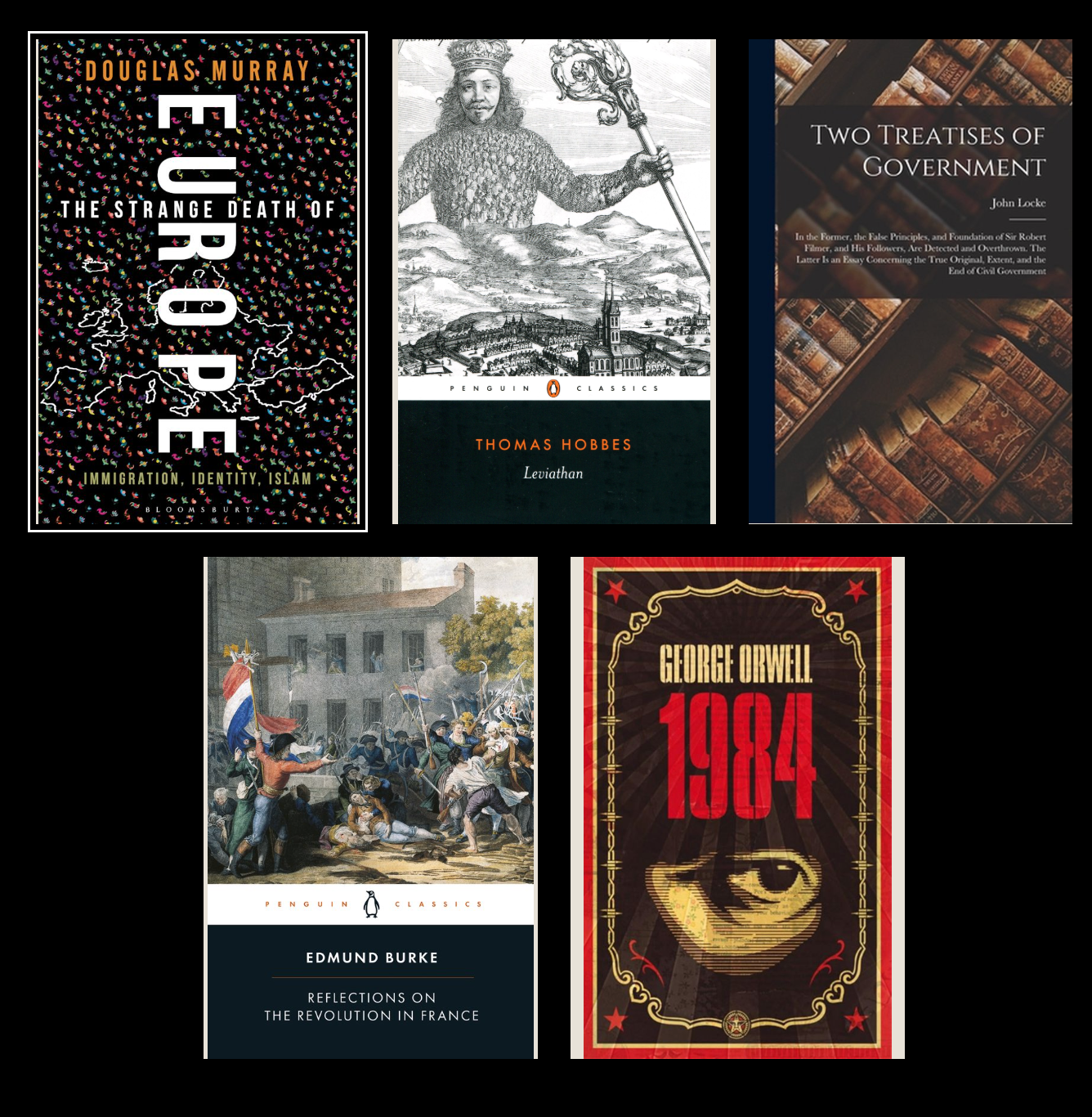
A 2023 independent review from the UK’s Commissioner for Public Appointments, William Shawcross, found that:
“While the [research] products related to Islamist terrorism focus on the most serious material relating to violent Islamist ideology, mostly Islamic State and al-Qa’ida, much of the material covering extreme right-wing falls well below the threshold for even non-violent extremism … [resources] not only covered non-violent far right extremism, but also examples of center-right debate, populism, and controversial or distasteful forms of right-leaning commentary and intolerance.”
RICU is still in operation.
2015: 77th Brigade
The British Army’s 77th Brigade was formed in 2015 to engage in non-lethal measures, “shaping behaviors through the use of dynamic narratives,” the Army said. Modeled on the Chindits, a British guerrilla warfare group operating during World War II, the 77th Brigade would leverage digital media to win modern conflicts in volatile information environments.
In 2019, British media confirmed that Gordon MacMillan, a senior executive at Twitter with editorial responsibilities spanning the Middle East and Europe, was also a reserve officer in the 77th Brigade.
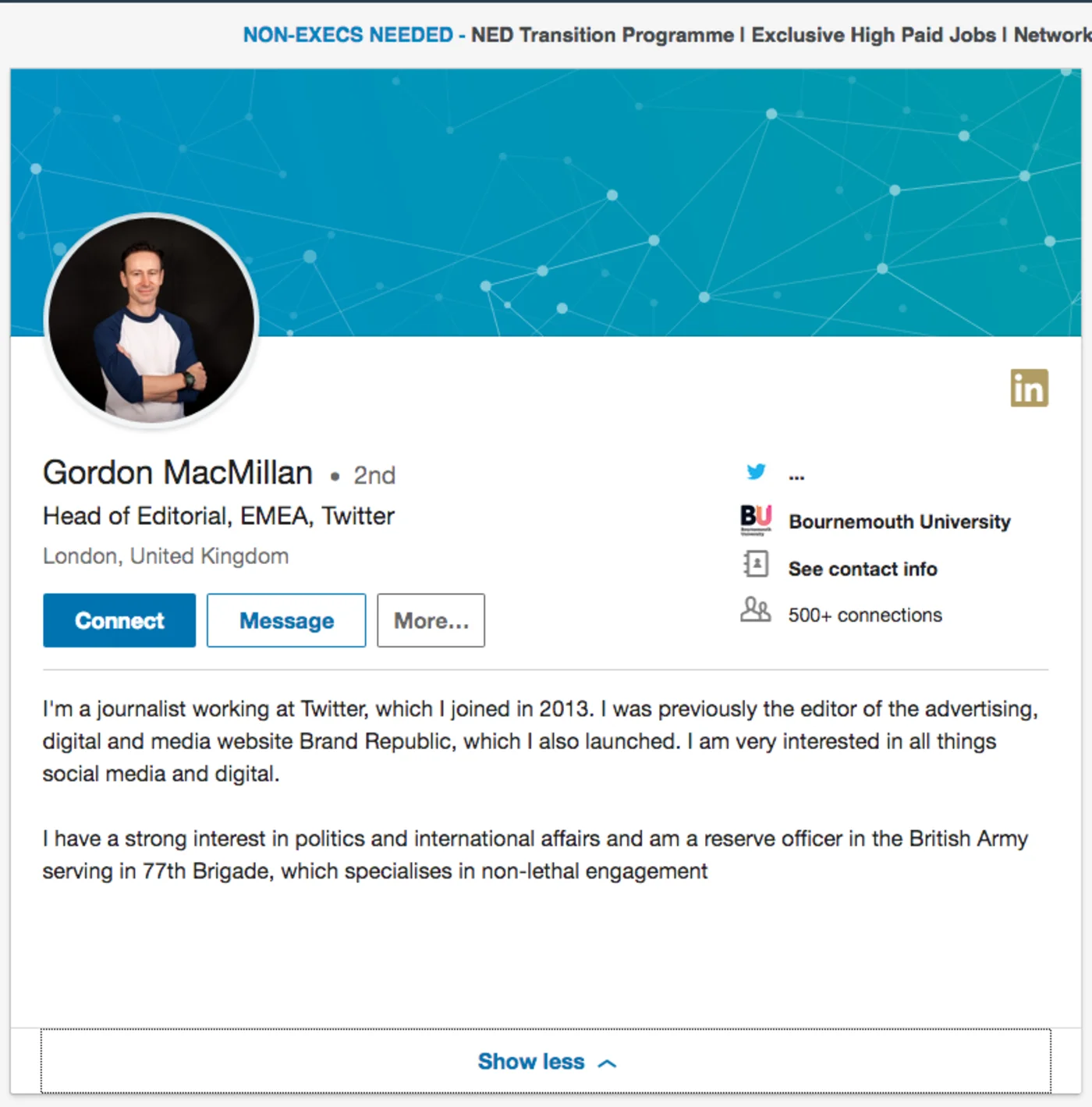
In April 2020, Chief of the Defence Staff General Sir Nick Carter stated publicly, “[The British Army] has been involved with the Cabinet Office Rapid Response Unit, with our 77 Brigade helping to quash rumors from misinformation, but also to counter disinformation.”
The Minister for Armed Forces, James Heappey, confirmed this in a written statement. He wrote, “A team from the Ministry of Defence, including members of the Army's 77th Brigade, is currently supporting the UK Government's Rapid Response Unit in the Cabinet Office and are working to counter dis/misinformation about COVID-19.” Heappey did not stipulate that the Brigade would limit its focus to foreign disinformation.
British citizens were quickly ensnared in the 77th Brigade’s net, according to a 2023 report.
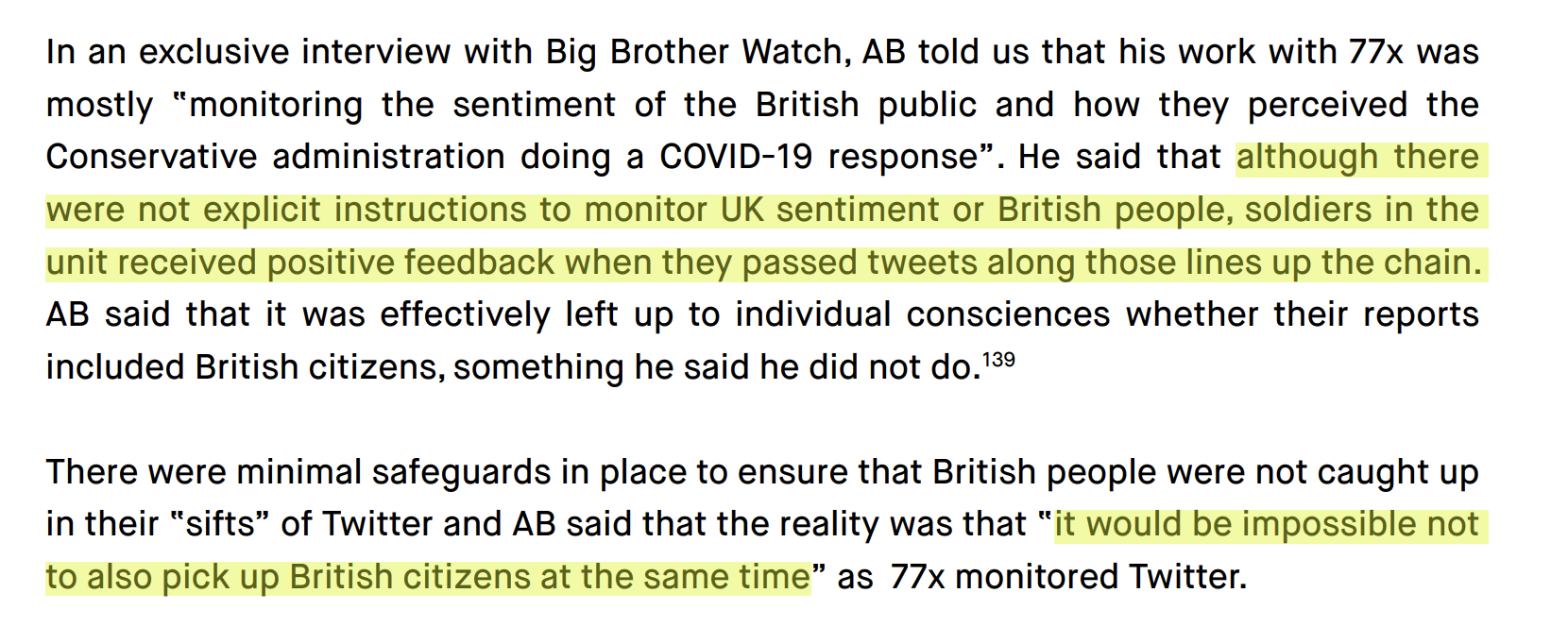
Peter Hitchens, a prominent critic of COVID lockdowns, was also flagged by the 77th Brigade alongside members of Big Brother Watch’s own staff (the British Ministry of Defence denies this).
Formed in 2015, the 77th Brigade had a mandate to engage in non-lethal information warfare against foreign threats. Four years later they had a Twitter executive in their ranks, and by 2020 the Brigade was gathering information on domestic sources of "disinformation".
The 77th Brigade has been quietly shuttered and its information warfare capabilities transferred to British special operations. A 2026 Freedom of Information request was denied on the grounds that “77 Brigade no longer exists as a formed unit within Defence.” A subsequent FOI request noted that Information Warfare Battalions persist within the Land Special Operations Force structure.
2018: Rapid Response Unit (RRU)
According to the UK government, “The RRU was created in early 2018 as a central team in the government Communications Service, which used publicly available information to identify trends in media and social media coverage.”
The Press Gazette: “When the Times reported [in 2018] that murder rates in London had outstripped those in New York for the first time, the RRU took action to ‘prevent panic’ in the face of what it said were ‘alarmist news stories’. It pushed out content on social media to ‘rebalance the narrative and reassure those most engaged with the topic’.”
RRU also manipulated Google search rankings. Following Royal Air Force strikes in Syria (2018), RRU took action to boost search results for government-endorsed sources above independent ones.
During COVID, RRU comprised the information hub that other units, including the 77th Brigade, reported to. During this time, as reported by Big Brother Watch, RRU monitored members of parliament who opposed vaccine passports, academics who questioned COVID statistics, and even the current Prime Minister, Andy Burnham, who criticized a lack of support for businesses.
RRU was disbanded in August 2022.
2019: Counter Disinformation Unit (CDU) & National Security Online Information Team (NSOIT)
The Counter Disinformation Unit was founded as “a cross-Government structure which operates during crises or periods of elevated risk of online disinformation campaigns targeting the UK.” According to the UK government, the unit was activated during the European Elections (2019) and UK General Elections (2019), before its infamous activation during the COVID-19 pandemic.
Amid the UK’s pandemic lockdowns, Paul Scully, a minister at the Department for Science, Innovation and Technology, explained that while “[CDU] does not monitor individuals, the content reviewed may incidentally include personal data, such as names and social media handles embedded within content published on publicly available sites.”
Similar to the 77th Brigade, CDU flagged posts critical of the UK government’s COVID lockdown strategy. In 2023, citing internal government documents, The Telegraph reported that “What the [CDU] meant by “responding” was varied. In some cases it involved an online rebuttal. But in others, the [Department for Culture, Media and Sport] used its position with the social media companies as what it called a “trusted flagger” to fast-track a request for content to be removed.”
Content flagged by CDU included warnings against mass-vaccinating children for COVID, criticisms of school closures, and expressions of sympathy for those suffering the economic impact of lockdowns.
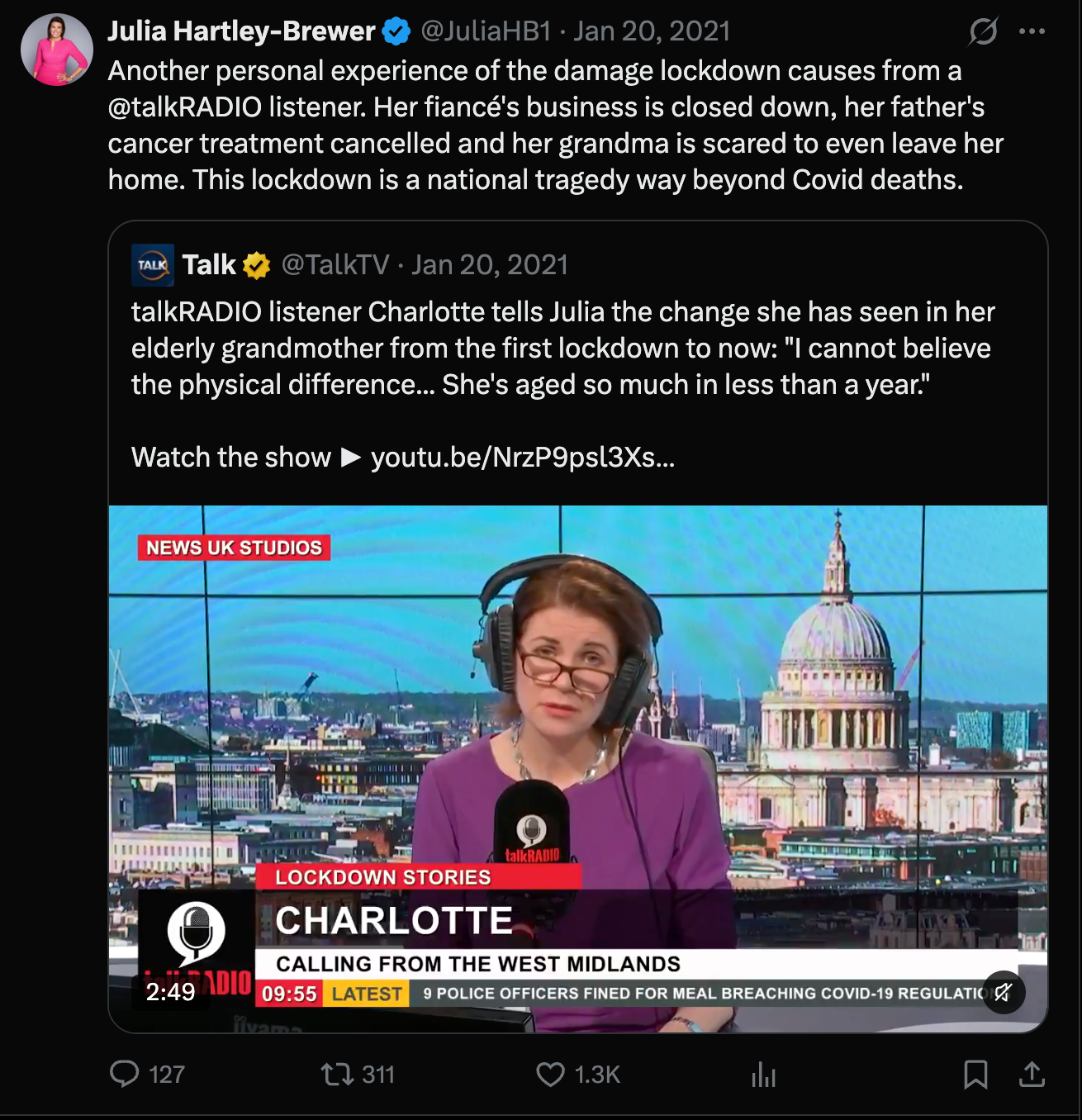
CDU had, according to Sarah Connolly, a senior official in charge of the unit, “daily – on occasion – hourly contact” with people she called her “colleagues [at] social media platforms.”
On November 14th, 2023, the CDU was renamed the National Security Online Information Team (NSOIT). The earliest public mention of this change Effort identified appeared in a written parliamentary answer from then-minister Sir John Whittingdale.
Whittingdale wrote that when content “is assessed to pose a risk to national security or public safety and which is assessed to breach the terms and conditions of the relevant platform it may share that content with the platform.”
Speech expressing support for proscribed organizations, encouraging crime, or knowingly sending false information with the intent of causing non-trivial harm is an example of prosecutable speech, including for British citizens. NSOIT does not refer speech to prosecutors. They focus on removing speech from social media that violates “the terms and conditions of the relevant platform.”
In summary, CDU began in 2019 as a temporary initiative activated during elections and became a permanent facet of UK censorship during COVID lockdowns. After CDU was caught collecting and removing legal – often factual – content, the unit was renamed.
NSOIT is still in operation.
2022: Government Information Cell (GIC)
The GIC was created by Foreign Secretary Liz Truss following Russia’s invasion of Ukraine. GIC’s aim was to counter disinformation through analysis and strategic communication. The UK government refused to publicize GIC’s budget because “doing so would give malign actors insight into [GIC’s] capabilities.”
GIC was absorbed into the Information Threats and Influence Directorate.
2022: Defending Democracy Taskforce (DDTF)
Britain’s Defending Democracy Taskforce was created in 2022 to “protect the democratic integrity of the UK from threats of foreign interference.” The taskforce includes members of parliament, the intelligence community, and law enforcement, among others.
A press release announcing their first meeting reveals DDTF’s goal of combating “threats [including] foreign interference in our elections and electoral processes; disinformation; physical and cyber threats to our democratic institutions and those who represent them; foreign interference in public office, political parties and universities; and transnational repression in the UK.”
In practice, the taskforce faces extreme political pressure to shift their focus inside the United Kingdom. In 2024, Labour MP Lucy Powell argued, “The Defending Democracy Taskforce should have a broader remit to defend democracy from threats within our borders.” And earlier this year, Dan Jarvis, Minister of State for Security, wrote, “The [Foreign Affairs] Committee is increasingly concerned about the adequacy of the UK’s domestic response to combating disinformation.”
The Defending Democracy Taskforce refused a Freedom of Information request, citing national security considerations in their response: “The Home Office cannot disclose the agenda, minutes, readouts, or briefings for ministers from the Defending Democracy Taskforce.” They refused to release a full list of attendees at DDTF meetings, once again citing “the Taskforce’s involvement in matters relating to national security at home and overseas.”
They are still in operation.
2023: Ofcom becomes a super-regulator
Up to now, our investigation paints a picture of disparate governmental units with obscure mission statements. Most of them relate to national security, taking on the day’s most exciting threat: jihadism, COVID, Russia. Most of these programs quickly ran past their original mandate, with many of them caught censoring their own citizens’ speech, before being renamed and reorganized to avoid accountability.
In 2023, British state censorship coalesced around the Online Safety Act. This was the formal manifestation of the UK’s online speech suppression that began with RICU in 2007 and continues to this day.
The 2023 Online Safety Act requires social media companies to proactively censor speech whenever there are “reasonable grounds to infer” an offense, a significantly lighter standard than the UK’s bar for illegal speech. Failure to do so can result in major fines and criminal liability for senior executives who refuse to comply with Ofcom investigations.
The Online Safety Act puts the weight of UK law behind London’s counter disinformation initiatives. Up until this point, any cooperation between platforms and the units/initiatives we have listed was theoretically voluntary. Now, platforms refusing to comply with British censorship efforts – particularly related to “foreign disinformation” – risks criminal penalties and fines.
In addition to disinformation, in 2023 British police made over 30 arrests a day over offensive social media posts. The 2023 Online Safety Act and Ofcom, the super-regulator in charge of enforcing it, are still in operation.
Overlapping Foreign and Domestic Mandates
Foreign disinformation: RICU, 77th Brigade, RRU, GIC, DDTF, HTD, NCID, Ofcom. Election integrity: CDU, DDTF. COVID-19: 77th Brigade, RRU, CDU. Domestic hate and negativity: NCID, Ofcom.- Foreign disinformation
- COVID-19
- Election integrity
- Domestic hate and negativity
- RICU: Foreign disinformation
- 77th Brigade: Foreign disinformation; COVID-19
- RRU: Foreign disinformation; COVID-19
- CDU: COVID-19; Election integrity
- GIC: Foreign disinformation
- DDTF: Foreign disinformation; Election integrity
- Ofcom: Foreign disinformation; Domestic hate and negativity
- HTD: Foreign disinformation
- NCID: Foreign disinformation; Domestic hate and negativity
2024: The Southport riots
In July 2024, a seventeen-year-old named Axel Rudakubana stabbed to death three girls and injured ten others inside a children's dance studio in Southport, England. The son of Rwandan immigrants, Rudakubana was a British citizen who had been referred to PREVENT, the UK’s counter radicalization program, three separate times. Rudakubana was arrested and sentenced to life imprisonment.
Following the attacks, protests occurred across England, most notably in Southport. Dubbed the Southport riots, over 1500 people were arrested. The protests were fueled by anti-immigrant sentiment, labeled “far-right extremism” by many in the UK government.
Then Prime Minister Sir Keir Starmer: “I guarantee you will regret taking part in this disorder whether directly or those whipping up this action online.” Metropolitan Police Commissioner Sir Mark Rowley said, “Being a keyboard warrior does not make you safe from the law.”
For its part, Ofcom wrote in an open letter to UK online service providers:
“regulated services will have three months to assess the risk of illegal content on their platforms, and will then be required to take appropriate steps to stop it appearing, and act quickly to remove it when they become aware of it. Some of the most widely-used online sites and apps will in due course need to go even further – by consistently applying their terms of service, which often include banning things like hate speech, inciting violence, and harmful disinformation.”
Southport also led to calls from NGOs and government officials to expand the 2023 Online Safety Act to more explicitly proscribe alleged disinformation.
2026: Hybrid Threats Directorate
An Effort investigation found the first official mention of the Hybrid Threats Directorate (HTD) to be in oral evidence presented to the House of Commons in early 2026. Jonny Hall, a longtime civil service officer, was tasked with building the Directorate.
Hall told the House of Commons “[HTD] is absolutely expanding both our own work, our partnerships and our engagement with our allies globally beyond Europe on what this threat picture looks like and what that means for future action.” HTD began with the mandate of countering Russian disinformation.
Powerbase lists HTD as the renamed version of the Information Threats and Influence Directorate, established in 2022. The Government Information Cell (profiled above) was absorbed by this Directorate, which was subsequently renamed to the HTD.
2026: National Centre for Information Defence
In his speech announcing NCID’s creation, Prime Minister Burnham described “an industrial-scale assault by hostile actors on the information environment” in the UK and elsewhere. There has been no end to this justification – along with the equal and opposite “industrial-scale assault” the British government has launched upon its own people – since the creation of the 77th Brigade in 2015.
The NCID will be housed within the Office for the Prime Minister and Cabinet. According to Civil Service World, NCID will work alongside law enforcement, intelligence agencies, and social media companies. The Centre aims to improve “community cohesion” and prevent distorted narratives about Britain from gaining traction online.
NCID has yet to release a full list of staff members, and their specific capabilities remain undisclosed. Refute, a British AI startup that tackles automated disinformation campaigns, publicly supported the NCID’s creation. Refute worked alongside similar companies to sponsor a May 2026 Council for Countering Online Disinformation event in the House of Lords.
Another one of the sponsors was Ghost Shift, a company that calls themselves, “experts in online intelligence gathering and influence campaigns… dedicated to helping organisations strengthen their online capabilities through online operations and targeted influence strategies.”
NCID's nebulous mandate is ripe for abuse. NCID intend to combat disinformation from hostile foreign actors. They also intend to promote community cohesion and battle pessimistic narratives about Britain’s political and economic future. Based on historical precedent, NCID will likely use their foreign information warfare mandate to once again target their domestic political opponents.
CLOSED OR RENAMED UK Censorship Agencies
The chronology repeated with 77th Brigade, RRU, CDU, GIC and ITID highlighted as closed or renamed; the other entries retain their chronology styling.- 2007Research, Information, and Communications Unit (RICU)Counter-terror mandate
- 201577th BrigadeMilitary information operationsRenamed
- 2018Rapid Response Unit (RRU)Created to identify trends in media coverageClosed
- 2019Counter Disinformation Unit (CDU)Activated to monitor elections disinformationRenamed
- 2022Government Information Cell (GIC)Formed to counter disinformation about the Ukraine warRenamed
- 2022Information Threats and Influence Directorate (ITID)Countering hostile-state information operationsRenamed
- 2022Defending Democracy TaskforceCountering 'threats to democracy'
- 2023Online Safety ActOfcom now regulates social media platforms
- 2026Hybrid Threats Directorate (HTD)Foreign information threats
- 2026National Centre for Information Defence (NCID)Newly established
The UK’s years-long censorship campaign is as amorphous as the threats it purports to defend against. Based on history, it is clear that government censors vastly exceed their original mandates, target British citizens, and face no legal repercussions for doing so. The 2023 Online Safety Act only makes that easier – tech companies are conscripted into the crackdown on speech. Meanwhile, calls for disinformation policing from government officials are ubiquitous.
We asked Preston Byrne, a lawyer in high profile cases defending American individuals and companies against British law, for his thoughts on this development: "The UK's state-backed censorship apparatus is exactly the evil that the First Amendment was designed to prevent: the government has the power to mandate that content it disapproves is removed from the Web, and uses state power to ensure that content it approves is prioritized.” Preston added that he wrote a bill to grant British citizens the equivalent of first amendment protections. “Law reform is essential to both ensure the freedoms of the people of the United Kingdom are not endangered by this or some future government,” he told Effort.
Andy Burnham’s new NCID is the successor to a long line of digital censorship programs which were closed after being investigated for abuse. British Prime Ministers have long repeated the same playbook: censor their own citizens under the guise of counter-terrorism, rename or replace the censors, and continue seizing new censorship powers. Burnham’s actions provide no reason to believe that this time will be any different.