How the EU is Controlling the Ceuta Story
The Digital Services Act Affects Information Worldwide
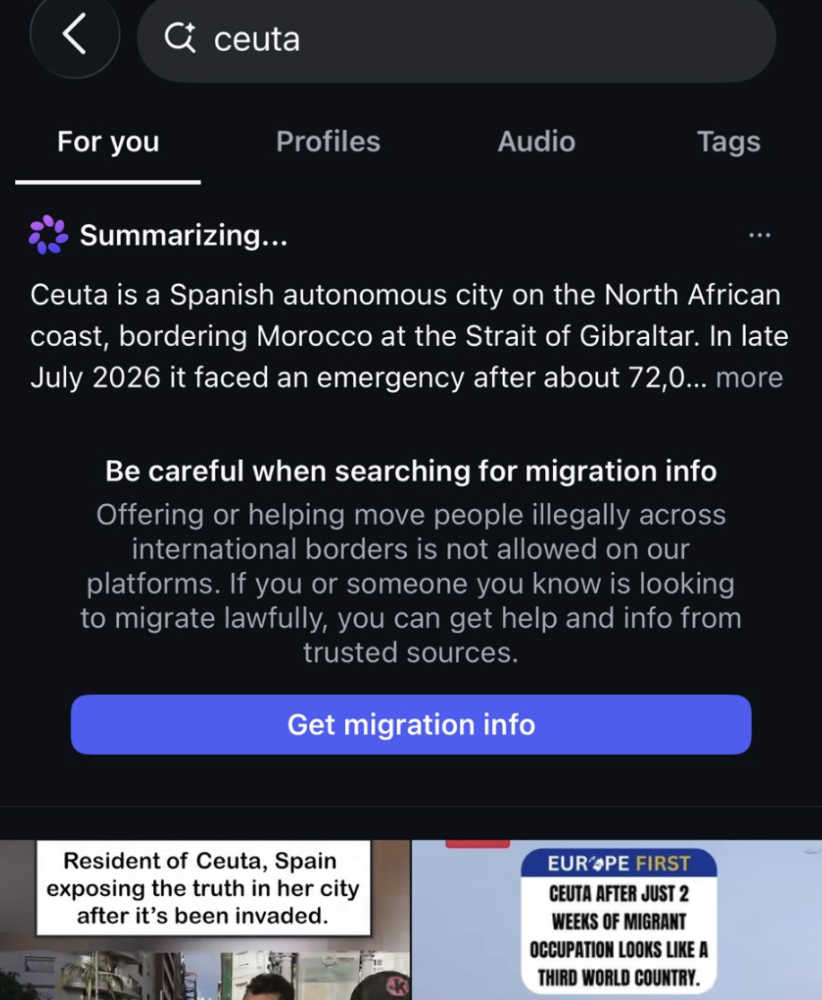
Shortly after migrants flooded the Spanish territory of Ceuta, notices popped up around Instagram and Facebook.1 These notices are not organic; they were coordinated by the European Commission along with two government-funded NGOs they designated as “reliable and trustworthy” fact-checkers.2
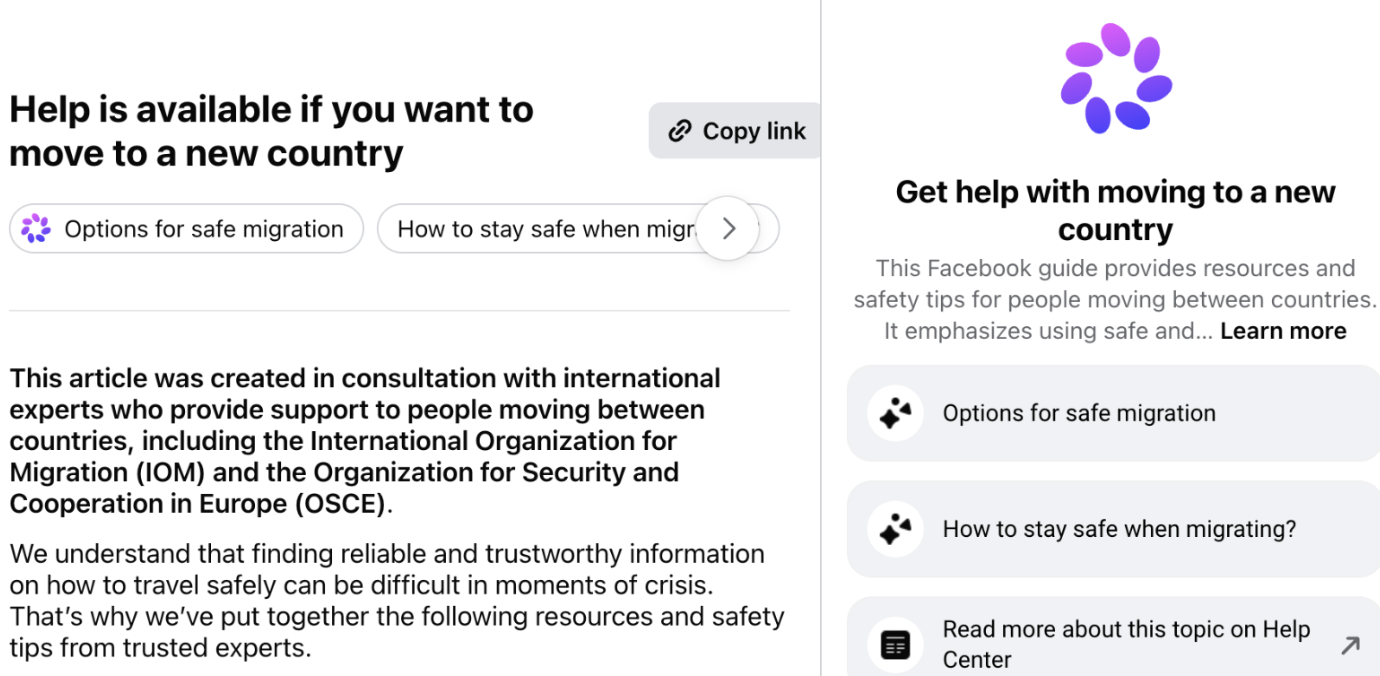
The European Commission’s rapid response has two components. The first warns presumed migrants about illegal traffickers. The second insists that “Monitoring must increase, cooperation with fact-checkers to be strengthened.”
The EU “Code of Conduct on Disinformation” establishes strict information control protocols. This code explicitly threatens Facebook, Instagram, LinkedIn, TikTok, YouTube, and Google Search with hundred million dollar fines if they do not obey these directives. The Commission already issued a €120M fine to X for refusing to censor political content.
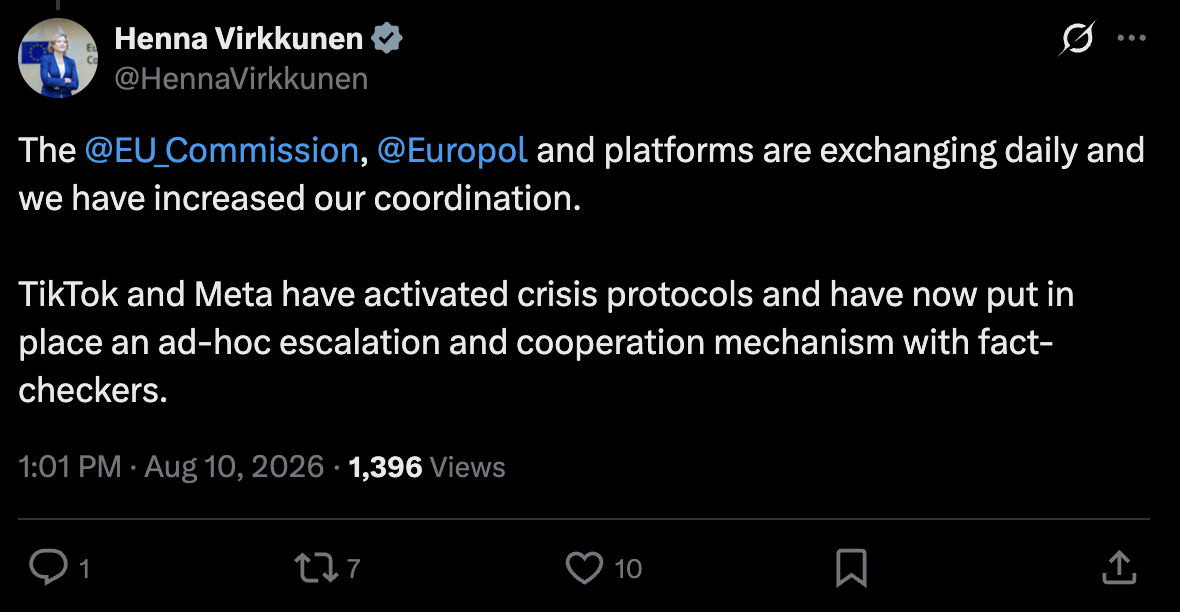
The European Commission has activated this protocol for Ceuta. “TikTok and Meta have activated crisis protocols and have now put in place an ad-hoc escalation and cooperation mechanism with fact-checkers,” a European Commission Vice-President claimed on X.
Who decides what is disinformation? The European Commission designated two transnational organizations as their arbiters for Ceuta: the International Organization for Migration (IOM) and the Organization for Security and Co-operation in Europe (OSCE). Neither NGO is independent or objective; both are political advocacy groups overwhelmingly funded by governments.
According to its charter, the IOM’s purpose is “to make arrangements for the organized transfer of migrants” and “to provide, at the request of and in agreement with the States concerned, migration services.” IOM received over $3B from governments in 2024.
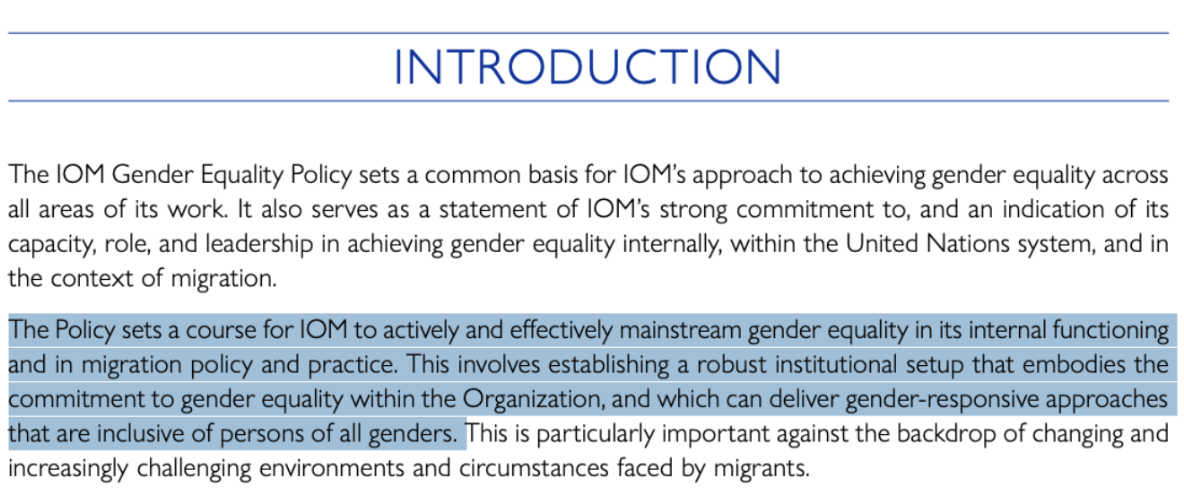
In 2024, IOM made its official policy to “effectively mainstream gender equality” and “deliver gender-responsive approaches that are inclusive of persons of all genders.” Another IOM report “aims to support the development of inclusive measures for migrants with diverse SOGIESC [sexual orientation, gender identity, gender expression and sex characteristics] to benefit from protection programming across their migration journey.” Its advocacy is a direct conflict of interest with fact-checking on behalf of the European Commission and Meta.
Likewise, OSCE is an advocacy organization funded by national governments, not an independent or objective evaluator.5 In their “ACTION PLAN FOR THE PROMOTION OF GENDER EQUALITY,” they wrote, “Stressing the need for the OSCE to develop further and strengthen a continuous and sustainable gender-mainstreaming process, to promote a gender-sensitive and professional working environment and management culture, and efforts towards gender balance in staffing in particular on a professional level.” OSCE received over €70M from governments in 2024.
While the European Commission has no jurisdiction over non-EU States, Effort has corroborated that these notices appear in the United States, Canada, Australia, Mexico, and the United Kingdom. This implies that these countries are all affected by the European Commission's rapid response protocol — including its political censorship.
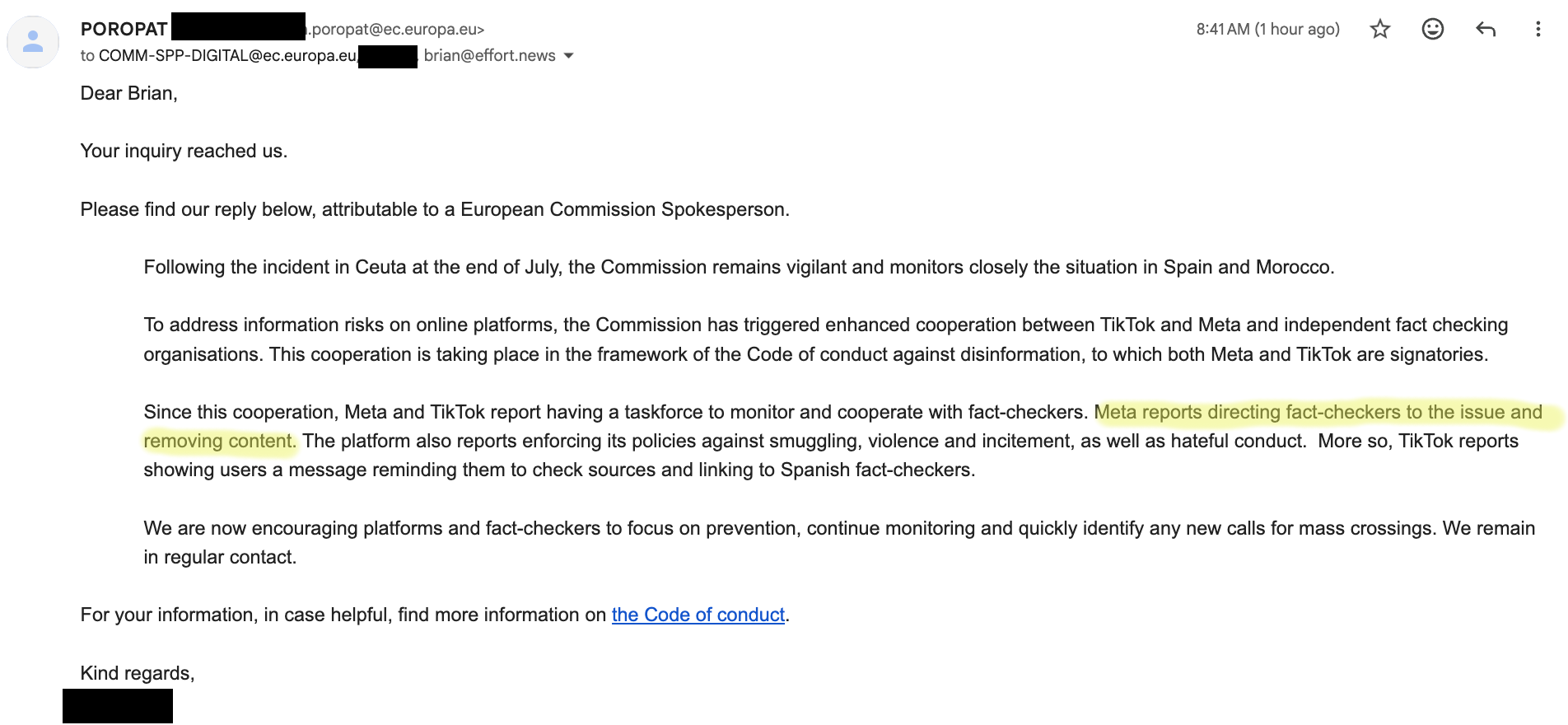
UPDATE: in a comment to Effort after the story was published, a European Commission spokesperson confirmed that Meta is "removing content" in cooperation with fact-checkers and the European Commission. The statement also confirms that TikTok is showing a message to users.
Footnotes
Instagram screenshot from Bill Melugin’s X post. Policies and similar screenshots independently verified by Effort. ↩
The Commission states that DSA fines may reach 6% of a provider’s global annual turnover. It fined X €120 million in December 2025 and AliExpress €550 million in July 2026.
The table reproduces the ten largest contributors shown in IOM’s Financial Report for 2024, using combined assessed, voluntary, and in-kind contributions rounded to the nearest million dollars.
IOM’s ten largest donors, 2024 Rank Donor Contribution Entity type 1 United States of America $1,517,000,000 Nation state 2 European Commission $480,000,000 EU institution 3 Canada $176,000,000 Nation state 4 United Kingdom $157,000,000 Nation state 5 Germany $156,000,000 Nation state 6 United Nations organizations and pooled funds $135,000,000 UN organizations and pooled funds 7 Netherlands (Kingdom of the) $93,000,000 Nation state 8 Australia $76,000,000 Nation state 9 Japan $59,000,000 Nation state 10 Italy $57,000,000 Nation state See the OSCE’s 2004 Action Plan for the Promotion of Gender Equality and its Annual Report 2024 funding tables.
OSCE Donors (2024) Rank Donor Pledge Entity type 1 European Union €21,802,260 Supranational institution 2 Germany €17,882,076 Nation state 3 Norway €10,022,993 Nation state 4 United States €7,046,644 Nation state 5 Sweden €3,595,157 Nation state 6 Finland €3,286,064 Nation state 7 United Kingdom €3,246,517 Nation state 8 France €3,010,000 Nation state 9 Italy €1,680,930 Nation state 10 Switzerland €1,391,266 Nation state 11 Ireland €659,098 Nation state 12 Austria €545,518 Nation state 13 Netherlands €468,000 Nation state 14 Czech Republic €460,494 Nation state 15 Japan €266,828 Nation state 16 Liechtenstein €255,356 Nation state 17 Malta €224,666 Nation state 18 Bulgaria €160,000 Nation state 19 Luxembourg €153,000 Nation state 20 Latvia €140,000 Nation state 21 Monaco €120,000 Nation state 22 Poland €112,782 Nation state 23 Cyprus €90,000 Nation state 24 South Korea €62,468 Nation state 25 Georgia €50,000 Nation state 26 Lithuania €50,000 Nation state 27 Slovenia €46,951 Nation state 28 Estonia €45,000 Nation state 29 Spain €41,572 Nation state 30 Romania €37,395 Nation state 31 Montenegro €34,000 Nation state 32 Slovakia €34,000 Nation state 33 Andorra €20,000 Nation state 34 Türkiye €20,000 Nation state 35 Croatia €13,089 Nation state 36 Thailand €10,734 Nation state 37 Albania €10,000 Nation state 38 Canada €3,000 Nation state 39 San Marino €1,387 Nation state 40 Moldova €706 Nation state